Testing phase · purchases coming soon

Acclimation & dipping

Bring new fish & corals home the safe way.

The first hour in a new tank matters most. Here's how to acclimate fish and corals, how to dip corals so pests never reach your reef, and what to do with extra-sensitive animals.

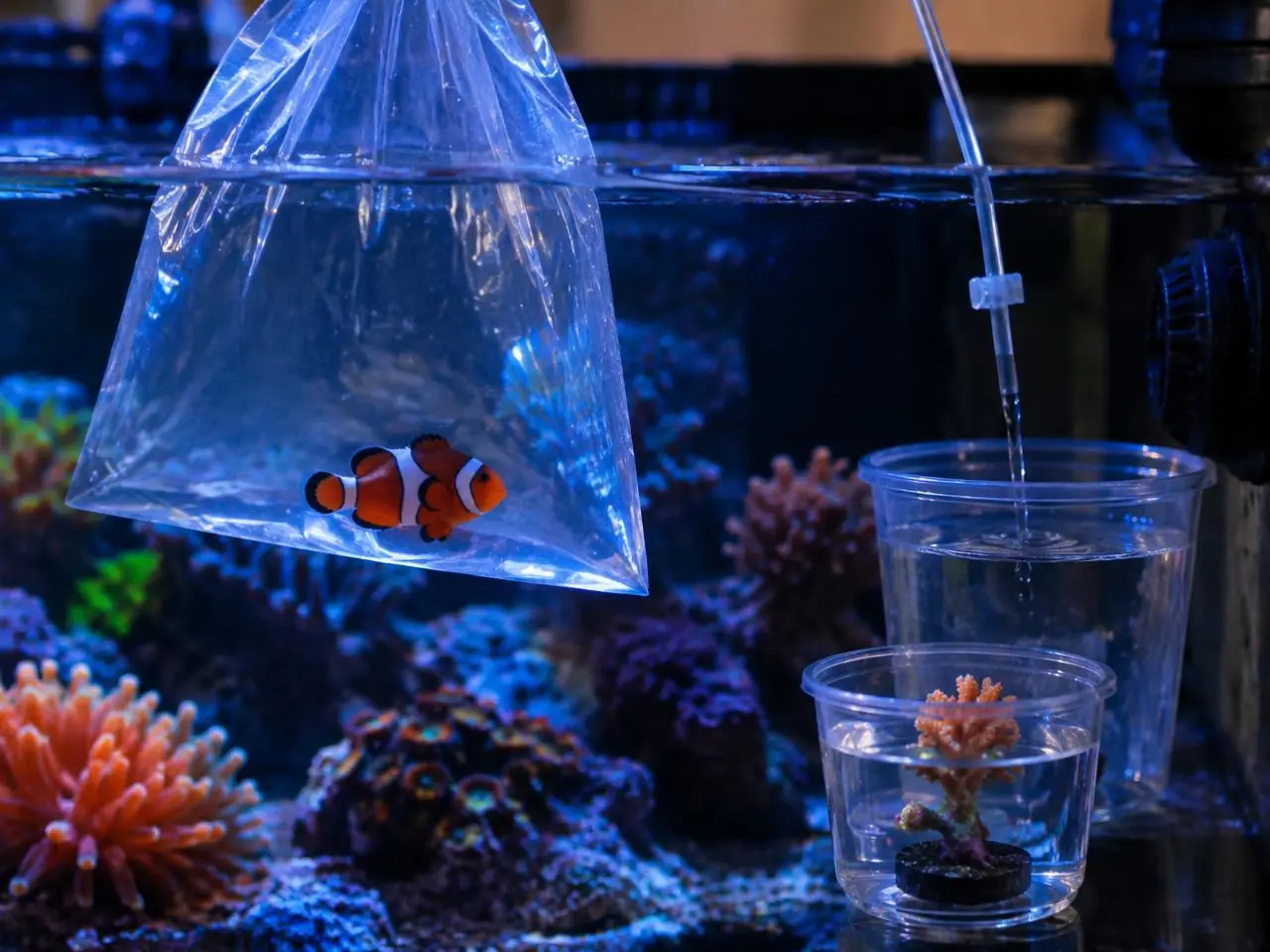
A clownfish floating in its bag in a reef tank beside a drip line and a coral frag soaking in a dip cup

Get ready

What you'll need

  • A clean bucket or container used only for the aquarium
  • Airline tubing with a valve (or a loose knot) to drip water
  • A fish net and a small cup for corals
  • Thermometer and refractometer to match temperature and salinity
  • A timer — your phone is fine
  • Coral dip and two extra containers of tank water for corals
  • A turkey baster for blowing pests off corals

We carry drip kits, refractometers, nets and coral dips in the shop.

Shipped orders

Before you open the bag

  • Open the box in a dim room

    Animals have been in the dark for the whole trip. Bright light right away stresses them, so keep room and tank lights low.

  • Keep our clip on the bag

    Check every bag before you open it. DOA claims need a photo or video of the animal in the bag with our clip still on it, sent within 1 hour of delivery. Once the clip is off, we can't take a claim.

  • Start right away

    Unpack and acclimate as soon as the box arrives. Waiting only lowers the water temperature and oxygen in the bag.

Full details are in our shipping policy.

Fish

How to drip acclimate a fish

Drip acclimation slowly swaps the bag water for your tank water so the fish adjusts to the new temperature, salinity and pH without a shock.

  1. 1

    Lights off, float the bag

    Turn the tank lights off. Float the sealed bag in the tank or quarantine tank for 15–20 minutes so the water temperatures match.

  2. 2

    Move fish and water to a bucket

    Gently pour the fish and its bag water into a clean bucket. Tilt the bucket so the fish stays covered.

  3. 3

    Start a slow drip

    Run airline tubing from the tank to the bucket and set it to about 2–4 drops per second with a valve or a knot.

  4. 4

    Drip until the water doubles twice

    When the water in the bucket has doubled, pour half out and keep dripping until it doubles again. Most fish take 45–60 minutes.

  5. 5

    Check salinity

    Test the bucket with a refractometer. When it matches your tank, the fish is ready.

  6. 6

    Net the fish — never the water

    Lift the fish out with a net and release it. Throw the bucket water away; never pour bag water into your tank.

  7. 7

    Keep the lights off for a few hours

    Leave the lights off for the rest of the day and skip feeding until the next day so the fish can settle and find hiding spots.

Corals

How to acclimate a coral

With corals, light is the big adjustment. Match the temperature, dip for pests, then let the coral get used to your light slowly.

  1. 1

    Float to match temperature

    Float the sealed bag for 15 minutes. Corals handle small salinity changes better than fish, so a long drip usually isn't needed.

  2. 2

    Dip the coral

    Dip every new coral before it touches your tank — even from a trusted shop. Follow the coral dipping steps below.

  3. 3

    Rinse in clean tank water

    Swish the coral in a second cup of tank water to rinse off the dip and any loose pests.

  4. 4

    Inspect the base and plug

    Look for eggs, snails, flatworms and aiptasia on the plug or rock. Scrape, snip or replace the plug if you find any.

  5. 5

    Place it low and shaded

    Put the coral on the sand bed or a lower rock, out of strong light and strong flow, even if it's an SPS that will live up high.

  6. 6

    Move it up over 1–2 weeks

    Raise it a little at a time while it opens up and keeps good color. Bleaching or white tips mean too much light, too fast.

Not sure where a coral should end up? Check light and flow on our coral compatibility chart.

Coral dipping

How to dip corals for pests

A coral dip knocks off flatworms, red bugs, nudibranchs and other hitchhikers before they get into your tank. Dip every new coral — it takes 15 minutes and can save your whole reef.

  1. 1

    Fill two containers with tank water

    One for the dip and one for rinsing. Use water from your tank so temperature and salinity match.

  2. 2

    Add dip by the label

    Measure the dip exactly as the bottle says for the amount of water. Never guess — stronger is not better.

  3. 3

    Dip and blast

    Put the coral in and gently squirt it with a turkey baster every minute or so to knock pests loose. Keep it for the time on the label, usually 5–15 minutes.

  4. 4

    Check the bottom of the dip

    Look for flatworms, red bugs, nudibranchs or bristleworms that fell off. If you see pests, that coral needs a second dip in a few days.

  5. 5

    Rinse well

    Swish the coral in the clean container of tank water so no dip goes into your display.

  6. 6

    Re-dip in about a week if needed

    Dips kill pests but not most eggs. If you saw pests, dip again in 5–7 days to catch new hatches — or keep the coral in quarantine first.

Types of coral dip

  • Iodine-based dips — a gentle, all-around dip that helps clean small wounds and loosens pests. Good for most corals.
  • Pest-control dips — stronger dips made to kill flatworms, red bugs and nudibranchs. Best for SPS, zoas and LPS from unknown tanks.
  • Tank-water rinse — swishing and blasting in plain tank water. Use it for delicate corals that don't handle strong dips.

Never use freshwater on corals — it will kill them.

Never put these in a coral dip

  • • Anemones
  • • Clams
  • • Shrimp, crabs and snails
  • • Starfish and urchins
  • • Fish

Dips are made for corals only. If a coral comes with a snail or crab on it, remove it before dipping.

How to dip each kind of coral

Same coral groups as our coral compatibility chart. Always follow the dip's label for dose and time.

Mushrooms & ricordea

Discosoma · Rhodactis & Bounce · Ricordea Yuma · Ricordea Florida

Gentle — shorter or milder dip

Look for: Aiptasia, bubble algae and hitchhiking snails on the rock

Mushrooms shrink up during a dip and bounce back. Use a shorter dip and check the rock carefully.

Zoanthids & palythoa

Zoanthids · Palythoa · Yellow Polyps

Dip as the label says

Look for: Zoa-eating nudibranchs, sea spiders and zoa pox

Look between the polyps and under the colony. Wear gloves — palythoa can carry a strong toxin.

Leather corals

Toadstool Leather · Finger Leather

Gentle — shorter or milder dip

Look for: Nudibranchs, aiptasia and leather-eating snails

Leathers often slime and close up after a dip. Keep the dip short and let them open in lower flow.

Fast-spreading softies

Kenya Tree · Pulsing Xenia · Green Star Polyps · Clove Polyps

Gentle — shorter or milder dip

Look for: Aiptasia, flatworms and nuisance algae

Hardy, but check the rock they're on — that's where hitchhikers hide.

Photosynthetic gorgonians

Photosynthetic Gorgonians

Gentle — shorter or milder dip

Look for: Gorgonian-eating snails and nudibranchs

Keep them underwater the whole time — never lift gorgonians into the air.

Torch, hammer & frogspawn

Torch Coral · Hammer & Octospawn · Frogspawn

Gentle — shorter or milder dip

Look for: Flatworms, bristleworms and brown jelly

Their soft tissue tears easily. Use a short, mild dip and squirt gently around the heads, not into them.

Acans, lobos & duncans

Acan · Echinata · Blastomussa · Lobophyllia · Duncan · Candy Cane

Dip as the label says

Look for: Flatworms, bristleworms and aiptasia on the skeleton

Check under the skeleton and between the mouths with a flashlight.

Scolys, buttons & brains

Scolymia · Cynarina (Button) · Acanthophyllia · Open Brain

Gentle — shorter or milder dip

Look for: Bristleworms and snails on the skeleton

Scolys and buttons bruise easily. Blast lightly and set them on the sand bed afterward.

Favia, favites & chalice

Favia & Favites · Chalice

Dip as the label says

Look for: Flatworms, nudibranchs and aiptasia

Chalice can pale after a dip; place them low and shaded while they recover.

Bubble & plate corals

Bubble Coral · Plate Coral

Inspect & rinse — avoid strong dips

Look for: Bristleworms and snails hiding in the skeleton

Bubbles are delicate — a strong dip can damage the bubbles. Rinse, inspect and use only a very mild dip.

Goniopora & alveopora

Goniopora & Alveopora

Inspect & rinse — avoid strong dips

Look for: Hitchhiking snails and algae on the base

Goniopora stress easily. Rinse and inspect closely instead of a strong dip, and give them low light at first.

Montipora, birdsnest & cyphastrea

Montipora · Birdsnest · Cyphastrea

Dip as the label says

Look for: Montipora-eating nudibranchs and their egg spirals

Look under plates for tiny egg spirals and scrape them off. Re-dip in 5–7 days if you find any.

Pocillopora & stylophora

Pocillopora · Stylophora

Dip as the label says

Look for: Red bugs, flatworms and crabs in the branches

Blast between the branches well — pests hide deep inside.

Acropora

Acropora

Dip as the label says

Look for: Acropora-eating flatworms (and their eggs), red bugs and nudibranchs

Always dip acros, check the base for egg patches and plan a second dip. Quarantine is best for acros.
Found a pest? Our pests & hitchhikers guide shows what it is and how to get rid of it.

Handle with care

Sensitive animals & special cases

  • Shrimp, starfish & urchins

    The most sensitive animals in the hobby. Drip extra slow — 1 to 2 hours — and keep starfish underwater the whole time.

  • Anemones

    Drip like a fish, never dip. Cover pump intakes and turn powerheads down until it picks a spot.

  • Clams

    Drip slowly, then set the clam on the sand bed. Move it up over a couple of weeks, like an SPS coral.

  • Wrasses

    Many bury in the sand when stressed. Make sure you have a sand bed, keep the lights off and don't panic if they hide for days.

  • Mandarins & dragonets

    Slow, careful drip. They need a mature tank full of copepods — add PodDrop copepods before they arrive.

  • Tangs & angelfish

    Prone to ich and velvet after shipping. Quarantine them and watch for white spots before adding them to the display.

  • Eels & jumpers

    Have a tight lid ready before you open the bag. Eels, gobies and wrasses will jump out of open tanks.

  • Long shipments

    After a long trip, ammonia builds up in the bag. Once the bag is open it becomes more harmful, so don't drag the drip out past about an hour for fish.

Quarantine

Why quarantine is worth it

  • A small, heated quarantine tank with a sponge filter and a hiding spot lets you watch new fish before they meet your display.
  • Watch for white spots, cloudy eyes, heavy breathing or not eating. It's much easier to treat one fish in quarantine than a whole tank.
  • Corals can go in a separate tank or a frag rack in quarantine to see if any pests hatch before they reach your reef.
  • Never put fish medicine or copper in a tank with corals or inverts.

Avoid these

Common acclimation mistakes

  • Pouring bag water into the tank

    Bag water can carry ammonia, pests and disease. Always net the animal out.

  • Bright lights right away

    Animals arrive stressed from the dark. Keep lights off for the rest of the day.

  • Skipping the coral dip

    One hitchhiking flatworm or nudibranch can wipe out a whole group of corals later.

  • Putting new corals up high

    Even high-light corals bleach if they go straight under strong light. Start low and move up.

  • Guessing the dip dose

    Too much dip burns coral tissue. Measure exactly by the label.

  • Removing our clip early

    If something arrives dead, we need a photo or video with the clip still on the bag.

Need a drip kit or coral dip?

We stock coral dips, drip acclimation kits, refractometers, nets and quarantine tank gear. Questions about a new arrival? Give us a call — we're happy to walk you through it.

Questions

Acclimation & dipping FAQ

How long should I acclimate a saltwater fish?

Most fish need about 45–60 minutes of drip acclimation after floating the bag for 15–20 minutes. Shrimp, starfish and urchins need longer — 1 to 2 hours.

Do I need to drip acclimate corals?

Usually not. Float the bag for about 15 minutes to match temperature, dip the coral, rinse it and place it low in the tank. The bigger adjustment for corals is light, so move them up slowly over 1–2 weeks.

Should I dip every new coral?

Yes. Even healthy corals from good tanks can carry flatworms, red bugs, nudibranchs or aiptasia. A 15-minute dip and a close look at the base is the easiest way to keep pests out of your reef.

Can I dip anemones or clams?

No. Coral dips are for corals only. Drip acclimate anemones, clams and other inverts slowly instead.

Can I pour the bag water into my tank?

Never. Bag water can carry ammonia, pests and disease. Net the fish out and throw the bag and bucket water away.

Where can I buy coral dip in Sarasota?

We carry coral dips, drip acclimation kits, refractometers and nets at 1882 Porter Lake Dr unit 106, Sarasota FL 34240. Call (941) 431-9410 to check stock — if we don't have it, we'll order it in.

Talk to a real reefer

Looking for a coral or fish? Give us a call.

We'll tell you what's in stock today, ship it to you (in-store stock is first come, first served), and help you plan your tank. Open Monday–Saturday 11 AM – 7 PM, Sunday 12 PM – 5 PM.

Call now Directions Shop