Testing phase · purchases coming soon

Setup guide

What you need for a successful tank.

Whether it's a 15-gallon nano or a 200-gallon showpiece, here's the gear each type of tank needs. Use it as a starting point, then come talk it through with us.

Every saltwater tank

The basics checklist

No matter what you keep, these are the building blocks. Items marked "nice to have" make life easier but aren't required on day one.

  • Tank & stand

    Pick the biggest tank your space and budget allow. Bigger tanks are more stable.

    We carry it
  • RODI water & salt

    Pure water plus a good salt mix, or ready-made saltwater.

    We carry it
  • Rock & sand

    Rock is home to the bacteria that clean your water; sand finishes the look.

    We carry it
  • Heater & thermometer

    Keep the tank steady around 76–79°F. Plan 3–5 watts per gallon.

    We carry it
  • Flow

    A return pump and powerheads keep water moving so nothing stagnates.

    We carry it
  • Filtration

    A filter or sump with filter socks, plus a protein skimmer on most tanks.

    We carry it
  • Lighting

    Any LED for fish-only tanks; reef-grade lighting for corals.

    We carry it
  • Refractometer

    Measures salinity. Aim for 1.025–1.026.

    We carry it
  • Test kit or water testing

    Test at home, or bring us a sample and we'll test it with you.

    We carry it
  • Bottled bacteria & patience

    Let the tank cycle before adding fish.

  • Auto top-offNice to have

    Adds fresh RODI as water evaporates so salinity stays steady.

  • Apex controllerNice to have

    Watches temperature, pH and more, and texts you if something's wrong.

    We carry it
  • CopepodsNice to have

    Live pods add life to the tank and feed picky eaters.

    We carry it
  • VitaminsNice to have

    AquaNutri multivitamins soaked into food help new fish settle in and keep colors bright.

    We carry it

From empty glass to thriving tank

Step by step

  1. 1

    Plan it

    Choose your tank size and what you want to keep: reef, fish-only or predators.

  2. 2

    Set up & fill

    Place rock and sand, then fill with saltwater and turn on the heater and flow.

  3. 3

    Cycle

    Add bacteria and let the tank mature. Bring a water sample in and we'll test it with you.

  4. 4

    Clean-up crew

    Once ammonia and nitrite read zero, add snails and hermits to tackle algae.

  5. 5

    First fish

    Start with one or two hardy fish, then add more slowly over weeks. Check our compatibility chart first.

  6. 6

    Corals

    Reef tanks: start with easy soft corals and LPS once the tank is stable.

Corals, fish & inverts

Reef tank

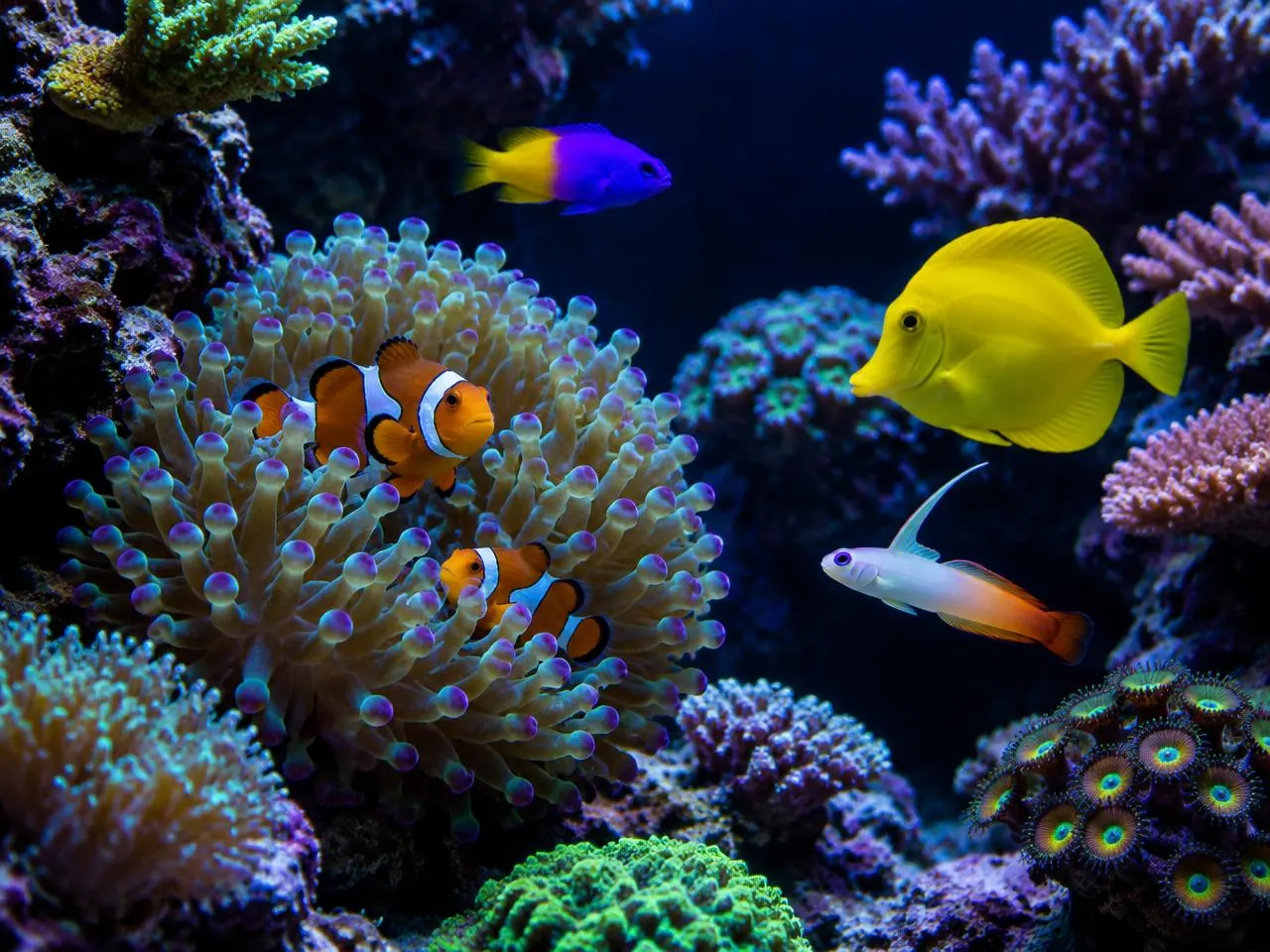
A living reef with corals, reef-safe fish and inverts. Corals need good lighting, steady water and strong flow, so reef tanks call for the most gear.

  • Reef-grade LED lighting
  • Strong, random flow from powerheads
  • Protein skimmer and filter socks
  • Reef salt mix with RODI water
  • Testing for alkalinity, calcium, magnesium and nitrate
  • Clean-up crew of snails, hermits and shrimp
Browse corals
Reef tank example

15–30 gal

Good for: Nano reefs, clownfish pairs, soft corals and LPS

Lighting
1 AI Prime 16HD or 1 Radion XR15
Flow
1 small powerhead
Filtration
Built-in filter (all-in-one tank) or nano sump; nano skimmer optional
Heating
1 × 100 W heater
Rock & sand
15–30 lb rock · 20–40 lb sand

40–75 gal

Good for: Mixed reefs, small tangs, gobies and wrasses

Lighting
1–2 Radion XR15 or 2 AI Prime 16HD
Flow
2 powerheads
Filtration
Sump with protein skimmer; refugium optional
Heating
2 × 100–150 W heaters
Rock & sand
40–75 lb rock · 40–100 lb sand

90–150 gal

Good for: Full mixed reefs, SPS, tangs and larger schools

Lighting
2–3 Radion XR15 or XR30
Flow
2–3 powerheads plus a strong return pump
Filtration
30–40 gal sump, skimmer, refugium; Apex recommended
Heating
2 × 200–300 W heaters
Rock & sand
80–150 lb rock · 100–200 lb sand

180–200 gal +

Good for: Show reefs, SPS systems, large tangs and angels

Lighting
3–4+ Radion XR30
Flow
3–4+ powerheads, wavemaker programming
Filtration
Large sump, oversized skimmer, reactors and dosing pump
Heating
2–3 × 300 W heaters on a controller
Rock & sand
150–200+ lb rock · 200–300+ lb sand

Pro tip: Keep things stable. Corals care more about steady water than perfect numbers, so make changes slowly.

Fish-only with live rock

FOWLR tank

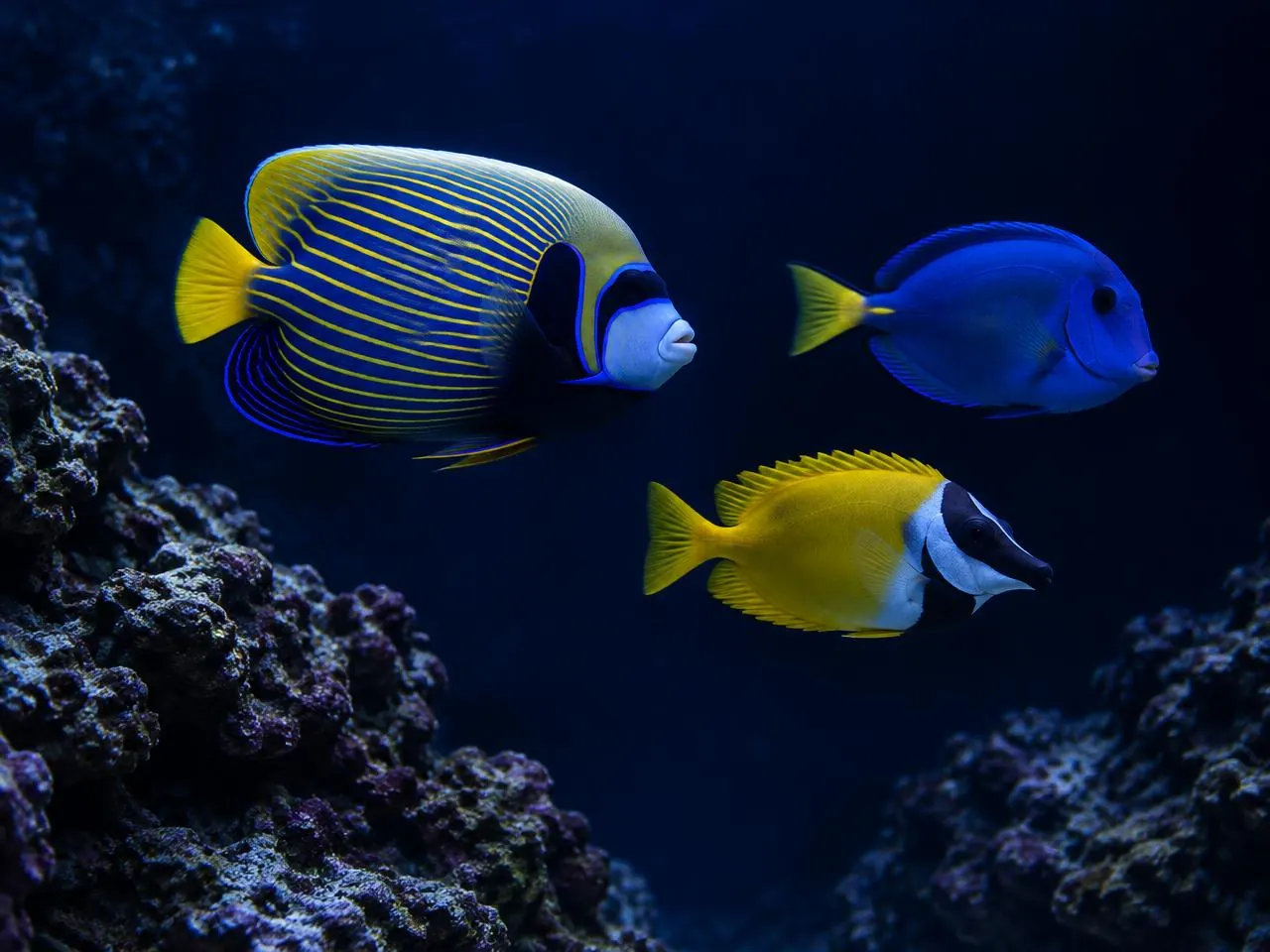
Fish and live rock, no corals. FOWLR tanks are easier to keep and open up bigger, more colorful fish like angels, triggers and puffers.

  • Strong filtration (fish make more waste than corals)
  • Protein skimmer rated above your tank size
  • Basic LED lighting; no coral-grade light needed
  • Open swimming room with less rock
  • Standard sea salt with RODI water
  • Regular water changes to keep nitrate down
Browse fish-only fish
FOWLR tank example

15–30 gal

Good for: Small fish only: clownfish, gobies, small damsels

Lighting
Any aquarium LED
Flow
1 small powerhead
Filtration
Built-in filter or hang-on-back filter, plus skimmer
Heating
1 × 100 W heater
Rock & sand
10–20 lb rock · 15–30 lb sand

40–75 gal

Good for: Dwarf angels, hawkfish, small puffers

Lighting
Any aquarium LED
Flow
1–2 powerheads
Filtration
Sump with a skimmer rated 1.5× your tank
Heating
2 × 100–150 W heaters
Rock & sand
25–50 lb rock · 40–100 lb sand or crushed coral

90–150 gal

Good for: Tangs, triggers, small large-angels, puffers

Lighting
Any aquarium LED
Flow
2 powerheads plus return pump
Filtration
Sump with a skimmer rated 1.5–2× your tank
Heating
2 × 200–300 W heaters
Rock & sand
50–100 lb rock · 100–200 lb sand

180–200 gal +

Good for: Large angels, big tangs, triggers and groupers

Lighting
Any aquarium LED
Flow
3+ powerheads
Filtration
Large sump, oversized skimmer, UV sterilizer
Heating
2–3 × 300 W heaters
Rock & sand
100–150 lb rock · 200–300 lb sand

Pro tip: Plan for adult size. That cute baby angelfish can reach 12–15 inches, so buy the tank for the fish it will become.

Eels, lionfish & groupers

Predator tank

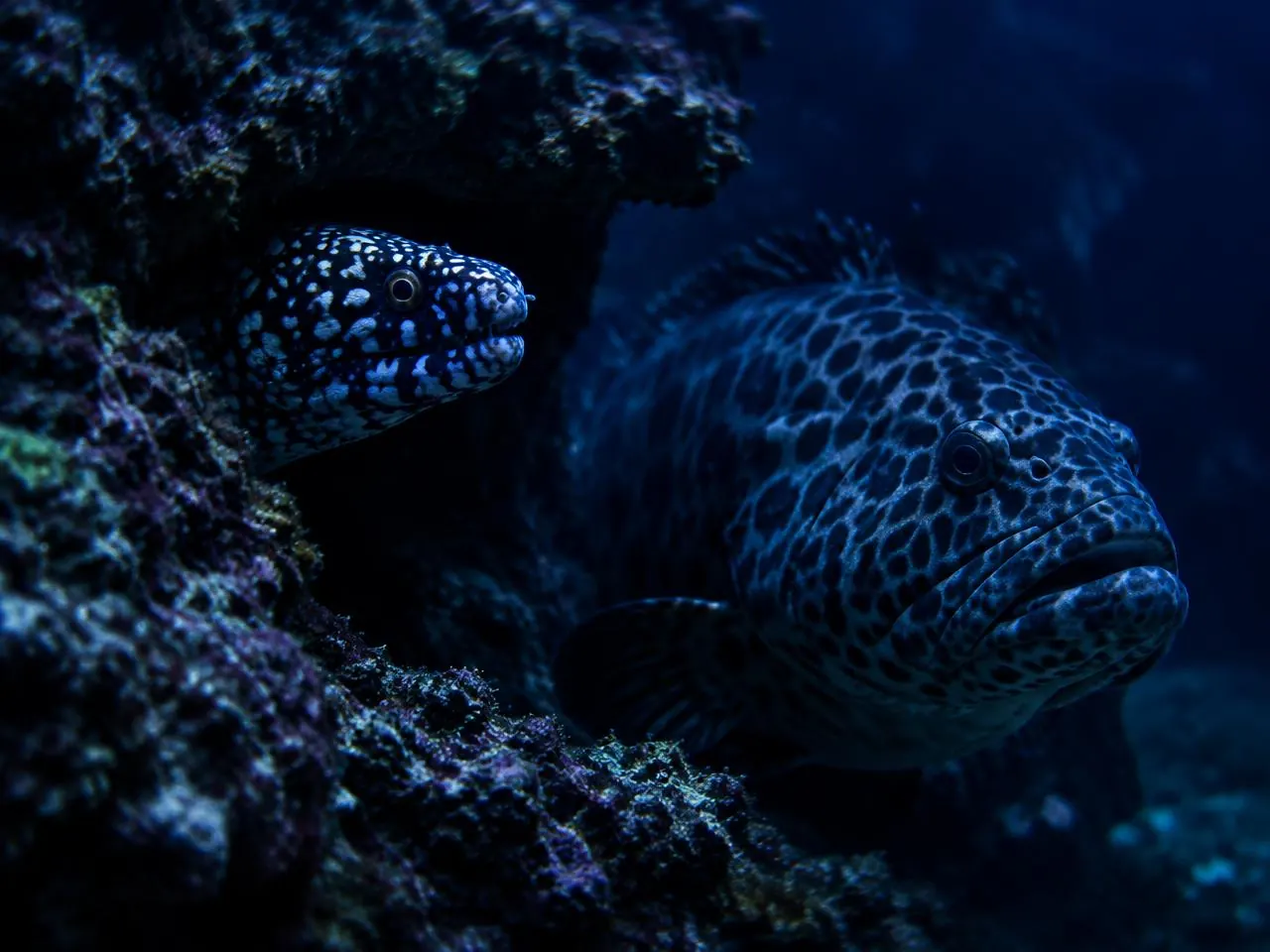
Big personalities with big appetites. Predators eat meaty foods and produce a lot of waste, so filtration and a tight lid matter most.

  • A tight-fitting lid; eels are escape artists
  • Oversized protein skimmer (2× or more)
  • Large water changes on a schedule
  • Caves and open space; secure rockwork so nothing falls
  • Meaty frozen foods and feeding tongs
  • Tankmates big enough not to be eaten
Browse predators
Predator tank example

15–30 gal

Good for: Not recommended. Only a single very small predator, such as a dwarf lionfish (30 gal).

Lighting
Any aquarium LED
Flow
1 powerhead
Filtration
Filter plus skimmer rated 2×
Heating
1 × 100 W heater
Rock & sand
15–25 lb rock · 15–30 lb sand

40–75 gal

Good for: Dwarf lionfish, snowflake or zebra eel, frogfish

Lighting
Any aquarium LED
Flow
1–2 powerheads
Filtration
Sump with a skimmer rated 2×
Heating
2 × 100–150 W heaters
Rock & sand
30–60 lb rock · 40–100 lb sand

90–150 gal

Good for: Volitans lionfish, small groupers, triggers

Lighting
Any aquarium LED
Flow
2 powerheads plus return pump
Filtration
Big sump, skimmer rated 2–3×, UV sterilizer
Heating
2 × 200–300 W heaters
Rock & sand
60–120 lb rock · 100–200 lb sand

180–200 gal +

Good for: Large eels, groupers; sharks and rays need 300+ gal with rounded corners

Lighting
Any aquarium LED
Flow
3+ powerheads
Filtration
Very large sump, oversized skimmer, reactors and UV
Heating
2–3 × 300 W heaters
Rock & sand
100–150 lb rock · 200–300 lb sand

Pro tip: If it fits in a predator's mouth, it's food. Choose tankmates carefully and ask us before mixing species.

Want a gear list made for your tank?

Every setup is a little different. Stop by with your tank size and goals and we'll put together a plan with you.

Visit the shop

Questions

Setup FAQ

How long does it take to set up a saltwater tank?

Let the tank fully cycle before adding fish. Bring us a water sample along the way and we'll test it with you.

What size tank should a beginner get?

Bigger is more forgiving. A 30–75 gallon tank is a great first reef: stable water, room for more fish, and still manageable to maintain.

Do I need RODI water?

Yes. Tap water has phosphate, nitrate and metals that feed algae and harm corals. Use RODI water for mixing salt and topping off. We sell RODI and premixed saltwater in store.

Do I need a protein skimmer?

Most saltwater tanks benefit from one, and fish-only and predator tanks really need one because they produce more waste.

Talk to a real reefer

Looking for a coral or fish? Give us a call.

We'll tell you what's in stock today, ship it to you (in-store stock is first come, first served), and help you plan your tank. Open Monday–Saturday 11 AM – 7 PM, Sunday 12 PM – 5 PM.

Call now Directions Shop