Reef conservation
Why coral reefs matter — and why they're disappearing.
Coral reefs are some of the most important places on Earth, and they're in real trouble. Here's what reefs do for us, what's killing them, what's happening right here in Florida, and how every one of us can help.
<1%
of the ocean floor is covered by coral reef
~25%
of all ocean species depend on reefs at some point in their lives
~97%
of wave energy can be stopped by a healthy reef before it hits the shore
84%
of the world's reef area hit by bleaching-level heat from 2023 to 2025
Why reefs matter
Why the world's coral reefs are so important
You don't need to live near the ocean to depend on coral reefs. Here's what they do for the planet and for people.
Rainforests of the sea
Reefs cover a tiny slice of the ocean but are home to about a quarter of all marine life — fish, shrimp, crabs, sponges, turtles and thousands of animals still being discovered.
Food for millions of people
Hundreds of millions of people around the world rely on fish and seafood that grow up on reefs. Many young fish use reefs as a nursery before moving out to open water.
Natural storm walls
A healthy reef breaks up waves before they reach the beach, protecting homes, roads and shorelines from storms, flooding and erosion — something Florida knows well.
Jobs and local economies
Fishing, diving, snorkeling and boating bring billions of dollars and tens of thousands of jobs to Florida alone. Healthy reefs keep coastal towns working.
Medicine from the reef
Chemicals found in reef sponges and other reef animals have helped lead to medicines used against cancer and viruses, and scientists are still searching reefs for new treatments.
White sand beaches
Much of the sand on tropical beaches is made from broken-down coral skeletons and calcified algae — and from parrotfish crunching on reef rock.
Threats
Why coral reefs are dying
Reefs rarely die from one thing. These stresses stack on top of each other — and a coral that's already weak from one is more likely to be killed by the next.
Hotter oceans & coral bleaching
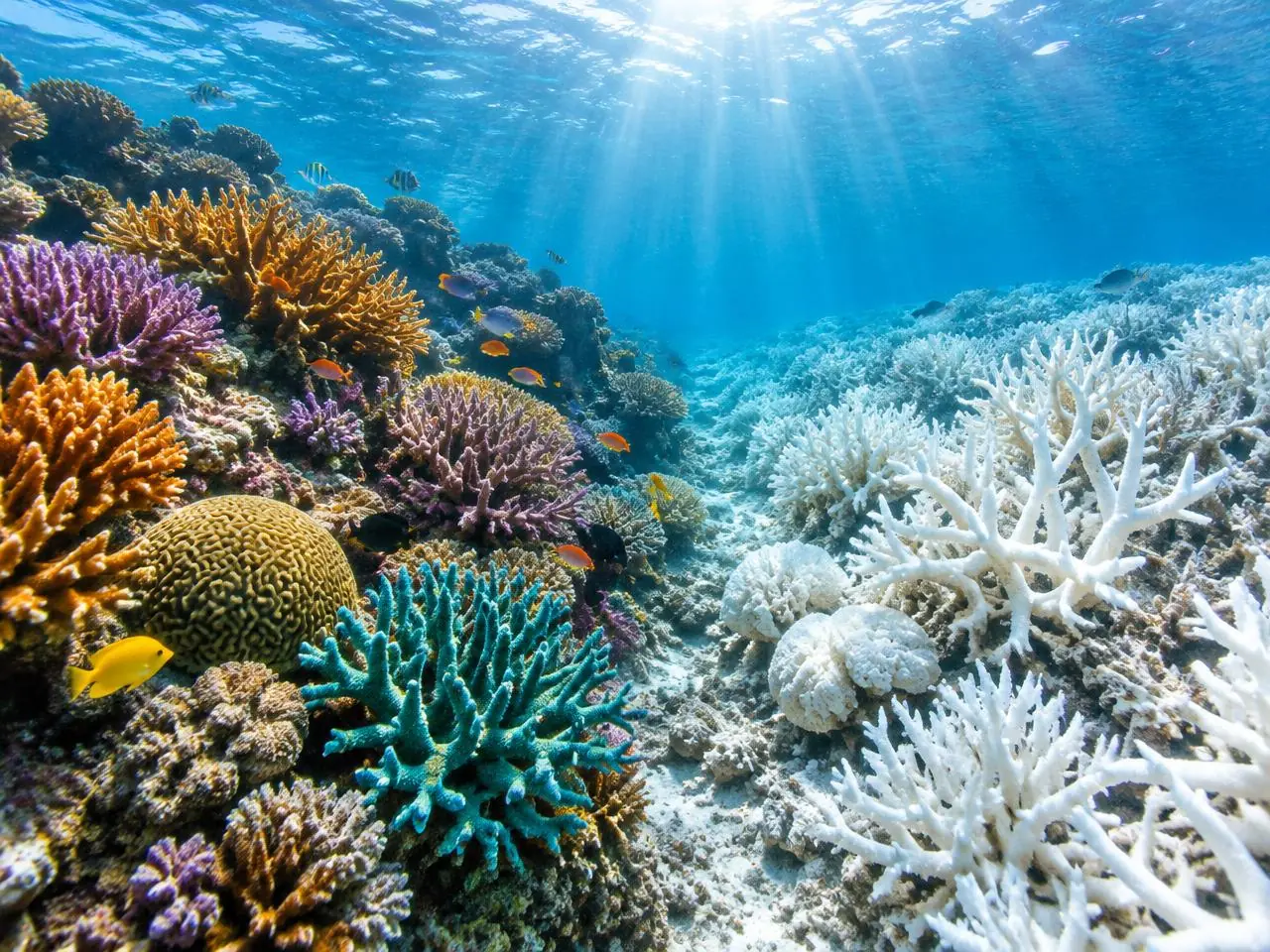
Corals live with tiny algae inside their tissue that make most of their food and give them color. When water stays too hot for too long, corals push the algae out and turn white — that's bleaching. A bleached coral isn't dead yet, but if the heat lasts, it starves. Marine heat waves are now the biggest threat to reefs worldwide.
How you can help: Cut energy use where you can and support groups like Mote that breed heat-tough corals for restoration.
Ocean acidification
The ocean soaks up carbon dioxide from the air, which makes seawater more acidic. That lowers the carbonate corals need to build skeletons — the same alkalinity reefers test for at home. Corals grow slower and reef rock can start to dissolve.
How you can help: Learn your own tank's alkalinity — it's the same chemistry that's changing on wild reefs.
Coral disease
Stony coral tissue loss disease was first seen off Miami in 2014 and spread along all of Florida's Coral Reef and across the Caribbean. It hits more than 20 kinds of stony coral, including brain and pillar corals, and can kill a colony in weeks. Stressed, hot corals catch diseases more easily.
How you can help: Never move wild corals or reef rock, and always dip and quarantine new corals before they go in your tank.
Pollution & runoff
Fertilizer, sewage and stormwater wash into the ocean and feed algae that smother corals — just like high nitrate and phosphate cause algae in an aquarium. Plastic, oil and some sunscreen chemicals like oxybenzone add more stress.
How you can help: Go easy on lawn fertilizer, pick up trash, and wear reef-friendly mineral sunscreen.
Overfishing & losing the clean-up crew
Parrotfish, tangs and long-spined sea urchins graze algae off the reef so baby corals have room to settle. When grazers are overfished or die off, algae takes over. Destructive fishing with dynamite or cyanide still wrecks reefs in some parts of the world.
How you can help: Buy aquacultured corals and responsibly collected, net-caught fish from shops you trust.
Coastal building & physical damage
Dredging and construction cloud the water and bury corals in silt. Boat anchors, groundings and divers or snorkelers standing on corals break colonies that took decades to grow.
How you can help: Use mooring buoys, anchor in sand and never touch or stand on a reef.
Invasive species
Lionfish have no natural predators in the Atlantic and eat huge numbers of small reef fish, including the grazers reefs need. Most scientists believe they got started from aquarium releases.
How you can help: Never release any aquarium animal or plant into the wild. Bring unwanted livestock to a shop instead.
The same chemistry is at work in your tank — see how alkalinity, nutrients and flow work in our dosing, flow & nutrient export guide.
Close to home
What's happening to Florida's Coral Reef
Florida's reef is a few hours' drive from our Sarasota shop — and it's one of the hardest-hit reefs on the planet.
America's only coral barrier reef
Florida's Coral Reef runs about 350 miles from the Dry Tortugas, through the Florida Keys, up to the St. Lucie Inlet. It's the only shallow coral barrier reef in the continental United States.
Most coral already lost
Disease, heat, pollution and the 1983 die-off of long-spined sea urchins have wiped out most of the living stony coral on Florida's reef since the 1970s.
The 2023 heat wave
In 2023 a record marine heat wave kept water at 88°F (31°C) or hotter for about 40 days on average and caused the ninth mass bleaching on Florida's reef. Near-shore water in the Keys topped 100°F.
Elkhorn & staghorn: functionally extinct in Florida
A 2025 study in the journal Science found that 97.8–100% of elkhorn and staghorn corals in the Florida Keys and Dry Tortugas died in the 2023 heat wave. These are the corals that built Florida's reef, and scientists now call them functionally extinct there — a few survive, but not enough to keep the reef growing.
The big question
Are coral reefs going extinct?
Are coral reefs going extinct?
Reefs as a whole aren't gone, but they are disappearing fast. The world has lost about half of its living coral cover since the 1950s, and some coral species — like elkhorn and staghorn in Florida — have already disappeared from places they ruled for thousands of years.
Bleaching is now almost every year
The world's fourth global bleaching event ran from 2023 to 2025 and was the biggest on record, with bleaching-level heat hitting about 84% of the world's reef area in at least 83 countries. NOAA says reefs are entering an era of near-yearly bleaching.
What the future could look like
Climate scientists project that 70–90% of today's warm-water reefs could be lost if Earth warms 1.5°C (2.7°F), and more than 99% at 2°C (3.6°F). How fast warming is slowed decides how much reef survives.
There is still hope
Restoration teams are growing and replanting hundreds of thousands of corals, breeding heat-tough strains and keeping 'gene banks' of corals safe in labs and aquariums. Every coral grown in captivity is one less taken from the wild.
Reef keeping done right
How reef keeping can help the ocean
Done properly, this hobby helps reefs instead of hurting them. That's a big part of why we do what we do.
Aquacultured corals
Most of the corals we sell are aquacultured — grown from frags in tanks, not taken from the ocean. Buying captive-grown corals takes pressure off wild reefs.
Learning grows ocean lovers
A reef tank lets families watch corals feed, grow and spawn up close. People who understand reefs are the ones who fight to protect them.
Florida's rules protect wild reefs
Wild stony corals and sea fans are protected in Florida. We only sell Florida-legal fish, corals and inverts, and our guides follow the same rules.
Our partnership with Mote
We're proud partners with Mote Marine Laboratory here in Sarasota. Mote's scientists helped pioneer micro-fragmentation — cutting corals into tiny pieces so they grow fast — and use it to grow and replant corals on Florida's reef.
Read more about our family, our values and our Mote partnership on our About us page, or see Florida's coral rules.
Take action
Simple ways anyone can help reefs
You don't need a tank — or a boat — to make a difference.
- 1
Buy aquacultured
Choose captive-grown corals and fish whenever you can. Ask your shop where livestock comes from.
- 2
Never release aquarium animals
Never release fish, inverts, corals, algae or tank water into the wild — not even in a canal. Bring unwanted animals to a shop.
- 3
Wear reef-friendly sunscreen
Pick mineral sunscreens (zinc oxide or titanium dioxide) and skip ones with oxybenzone and octinoxate. A rash guard is even better.
- 4
Hands off the reef
When you snorkel or dive, don't touch, stand on or kick corals. Keep fins up and gear tucked in.
- 5
Boat smart
Use mooring buoys or anchor in sand, watch your depth and never drag an anchor across a reef.
- 6
Cut runoff at home
Use less lawn fertilizer, follow local summer fertilizer rules, and keep grass clippings and pet waste out of storm drains.
- 7
Report what you see
Florida divers can report bleaching and sick corals to Mote's BleachWatch program so scientists know where to look.
- 8
Support reef research
Volunteer, donate or visit Mote Aquarium. Restoration and research depend on community support.
- 9
Keep learning and share it
Talk about reefs with friends and kids. Our free guides are a good place to start.
Start a reef tank the right way
Come see our aquacultured corals in person, or call with any question — we love helping people get into this hobby responsibly.
Questions
Reef conservation FAQ
Why are coral reefs important?
Reefs cover less than 1% of the ocean floor but support about a quarter of all ocean species. They feed millions of people, protect coastlines from storms, support fishing and tourism jobs, and have helped lead to new medicines.
Why are coral reefs dying?
The biggest threat is hotter ocean water, which causes coral bleaching. Ocean acidification, coral disease, pollution and runoff, overfishing, coastal damage and invasive species like lionfish add to the stress.
Are coral reefs going extinct?
Reefs are declining fast — about half of the world's living coral cover has been lost since the 1950s — and some species are already gone from whole regions. In 2025 scientists reported elkhorn and staghorn coral are functionally extinct on Florida's Coral Reef after the 2023 heat wave.
What is coral bleaching?
When water stays too hot, corals push out the tiny algae living in their tissue that feed them and give them color, and they turn white. Bleached corals can recover if the water cools in time, but long heat waves starve and kill them.
Does buying aquarium corals hurt reefs?
Aquacultured corals are grown in tanks from frags, so they don't take anything from wild reefs. Choose captive-grown corals, buy from shops you trust, and never release aquarium animals into the wild.
How can I help coral reefs in Florida?
Buy aquacultured, never release aquarium animals, wear reef-friendly mineral sunscreen, don't touch reefs, use mooring buoys, cut fertilizer runoff and support reef research like Mote Marine Laboratory. Questions? Call us at (941) 431-9410.
Talk to a real reefer
Looking for a coral or fish? Give us a call.
We'll tell you what's in stock today, ship it to you (in-store stock is first come, first served), and help you plan your tank. Open Monday–Saturday 11 AM – 7 PM, Sunday 12 PM – 5 PM.