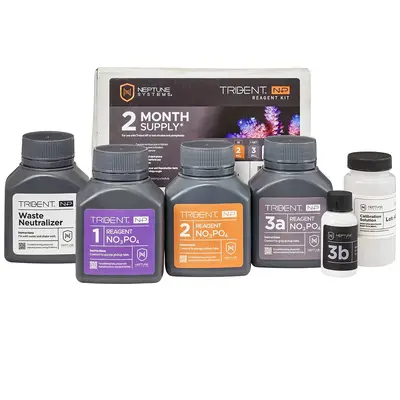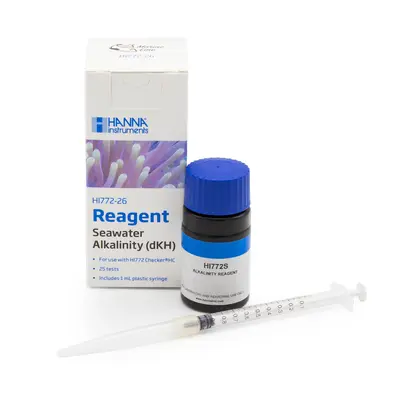
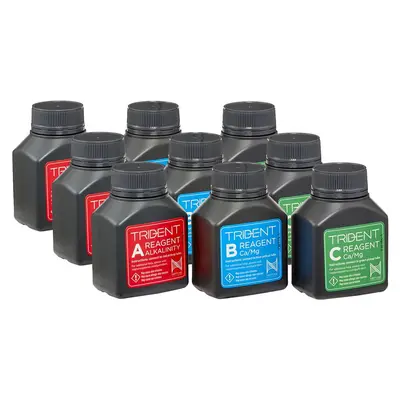
Neptune Systems
6-Month Trident Reagent Kit
$109.99
Testing phase · purchases coming soonWe're in a testing phase — purchases will be available soon
Product photos are from the maker; packaging may vary.
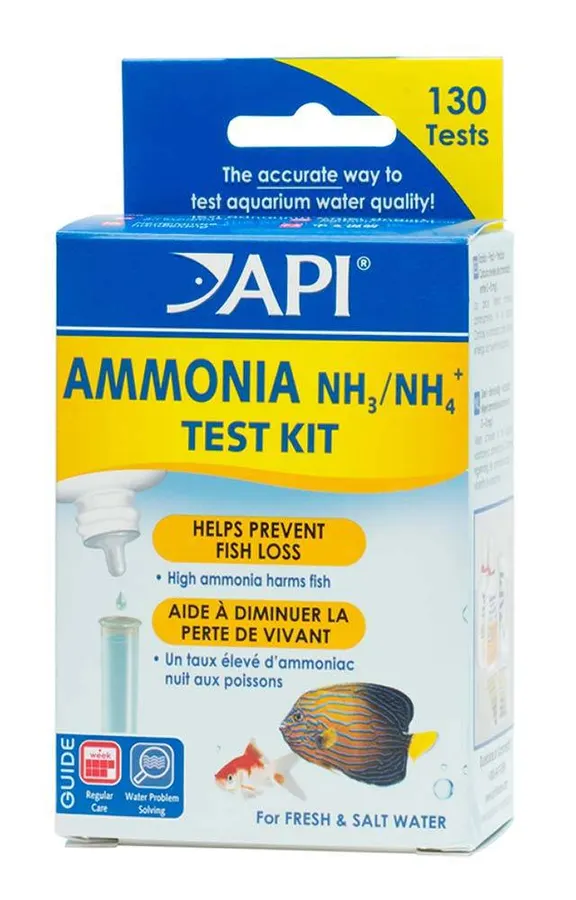
API
$15.48
Your card is charged now for the items, shipping and sales tax — the buyer always pays shipping, shown before you pay, except gear orders of $1,500 or more, which ship free. Under $1,500, tanks and stands ship by freight, charged to this same card once packed. No returns. Shipping policy
Salicylate test measures ammonia levels in both fresh & saltwater aquariums. Ammonia, the #1 killer of tropical fish, is continually produced in the aquarium from fish waste & uneaten fish food. Tests ammonia levels from 0 to 8 ppm. Test kit of 110 tests. Why test for Ammonia? Tropical fish continually release ammonia (NH3) directly into the aquarium through their gills, urine, and solid waste. Uneaten food and other decaying organic matter also add ammonia to the water. A natural mechanism exists that controls ammonia in the aquarium – the biological filter. It is made up of nitrifying bacteria, which live in the gravel bed. However, as with any natural process, imbalances can occur. Testing for the presence of toxic ammonia is essential, so that once detected, steps can be taken to remove it. Otherwise, ammonia in the aquarium will damage gill membranes, and prevent fish from carrying on normal respiration. High levels of ammonia quickly lead to fish death. Even trace amounts stress fish, suppressing their immune system and thereby increasing the likelihood of disease outbreaks and subsequent fish loss. Testing Tips: This salicylate based ammonia test kit reads the total ammonia
What the Test Results Mean: In a new freshwater or saltwater aquarium, the ammonia level may surge to 6 ppm (mg/L) or more, and then fall rapidly as the biological filter becomes established. The ammonia will be converted to nitrite (also toxic), then to nitrate. This process may take several weeks. Use Aquarium Pharmaceuticals STRESS ZYME® to speed up the development of the biological filter. In an established aquarium, the ammonia level should always remain at 0 ppm (mg/L). The presence of ammonia indicates possible over-feeding, too many fish, or inadequate biological filtration. The ammonia level is not an indication of the nitrite level; nitrite is another toxic waste material which must be tested separately. Monitoring Ammonia Levels: Regular testing is necessary to make sure the ammonia level is safe. Aquarium water should be tested for ammonia every other day when the aquarium is first set up, and once a week after the biological filter has been established (in about 4 to 6 weeks). Water Changes Changing 25% of the aquarium water will reduce the ammonia level in emergency situations. In situations where animals are present, daily testing and water changes may be required ov
Talk to a real reefer
We'll tell you what's in stock today, ship it to you (in-store stock is first come, first served), and help you plan your tank. Open Monday–Saturday 11 AM – 7 PM, Sunday 12 PM – 5 PM.