Neptune Systems
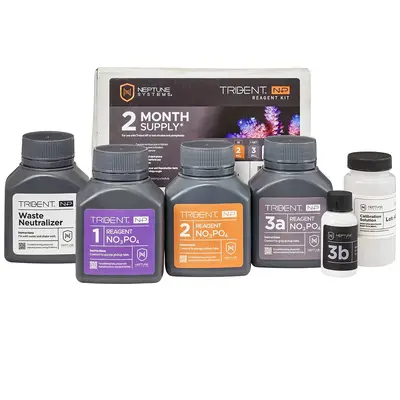
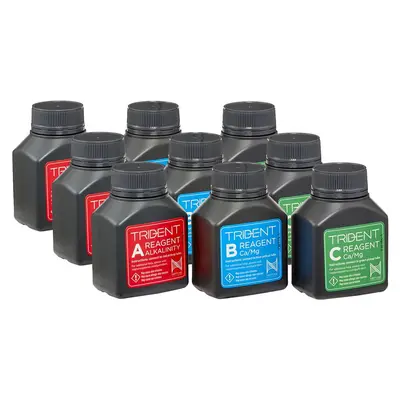
6-Month Trident Reagent Kit
$109.99
Testing phase · purchases coming soonWe're in a testing phase — purchases will be available soon
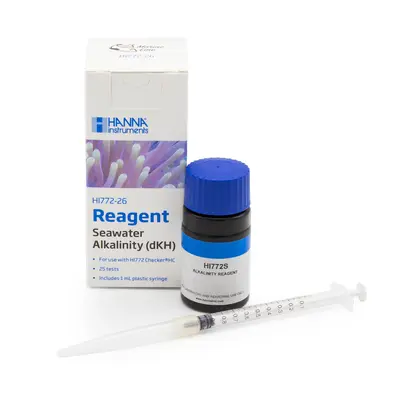
Product photos are from the maker; packaging may vary.
API
$35.98
Your card is charged now for the items, shipping and sales tax — the buyer always pays shipping, shown before you pay, except gear orders of $1,500 or more, which ship free. Under $1,500, tanks and stands ship by freight, charged to this same card once packed. No returns. Shipping policy
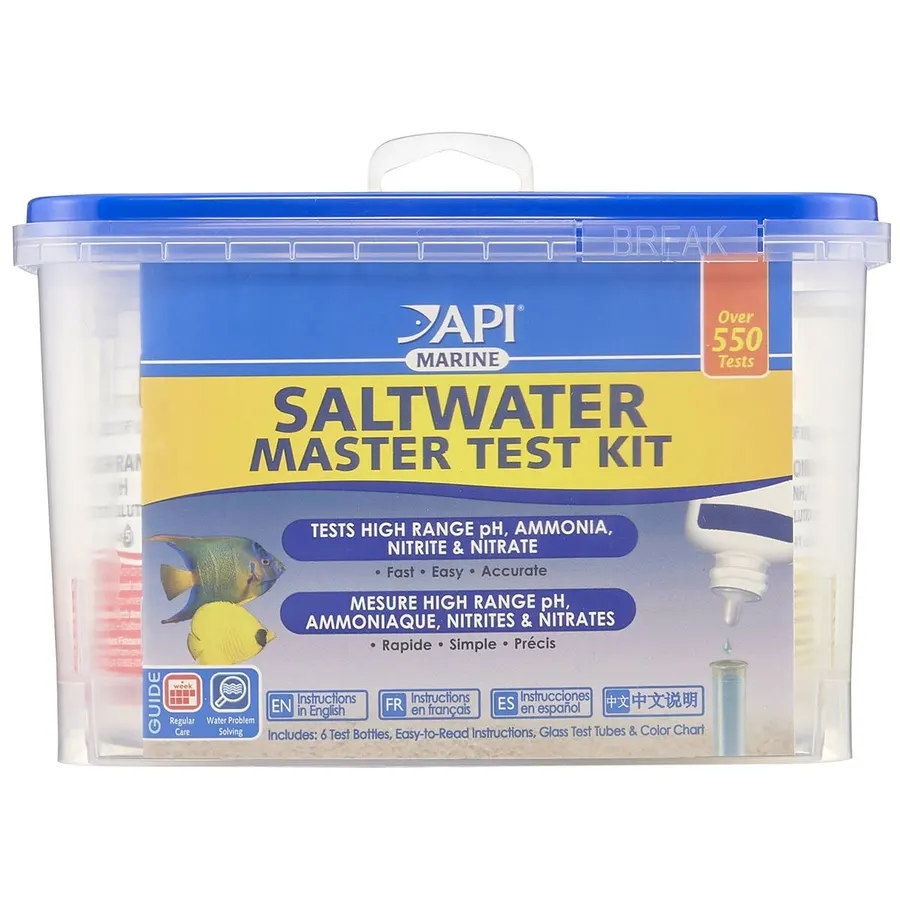
Bundle & Save! This affordable Master Kit includes everything you need to monitor four important parameters in your saltwater aquarium. Kit Includes:
Freshwater/Saltwater High Range pH Test Instructions: Why Test pH? pH is the measure of acidity of water. A pH reading of 7.0 is neutral. A pH higher than 7.0 is alkaline, and a pH lower than 7.0 is acidic. Certain freshwater fish thrive at a pH above 7.0. Live-bearers and goldfish require a pH of 7.5. African cichlids, marine fish and invertebrates require a pH between 8.2 and 8.4. Maintaining the aquarium at the proper pH ensures optimal water quality. Testing Tips: This test kit measures pH from 7.2 to 8.8 in either fresh or saltwater aquariums. This kit contains two High Range pH Test Color Charts — one for freshwater aquariums, and one for saltwater aquariums — so be sure to use the correct chart for your type of aquarium when interpreting test results. The Freshwater pH Test Color Chart is the appropriate chart to use for testing freshwater aquariums to which aquarium salt and African cichlid salt have been added. Artificial salt water should have a pH of 8.2. If not, adjustment with Aquarium Pharmaceuticals PROPER pH™ 8.2 is recommended. pH adjustment may be required in newly made salt water. Directions for Testing pH:
Recommended pH Levels: Saltwater A pH level of 8.2 is ideal for saltwater fish, invertebrates and African cichlids. To automatically set the pH at 8.2. use Aquarium Pharmaceuticals PROPER pH 8.2 for saltwater aquariums. Proper pH 8.2 is a carbonate buffer which automatically adjusts and holds the pH at 8.2. Freshwater A pH of 7.5 is ideal for most live-bearing fish, such as mollies and swordtails. Goldfish will also thrive at a pH of 7.5. To raise or lower the pH of a freshwater aquarium, use Aquarium Pharmaceuticals pH UP™ or pH Down™, following the directions on the container. Proper pH 7.5 may be used to automatically adjust and hold pH at 7.5. Proper pH 8.2 may be used in African cichlid aquariums. Frequency of Testing: The pH should be tested weekly, since natural materials in the aquarium (such as fish waste and decaying food) can cause pH changes. The minimum pH reading for this kit is 7.2 and the maximum is 8.8. Under extreme water conditions, readings below the minimum will read 7.2 and above the maximum will read 8.8. pH adjustments outside the range of this kit will not show any changes until the pH of the aquarium water is within the range of this kit. CAUTION:
Freshwater/Saltwater Ammonia Test Instructions: Why test for Ammonia? Tropical fish continually release ammonia (NH3) directly into the aquarium through their gills, urine, and solid waste. Uneaten food and other decaying organic matter also add ammonia to the water. A natural mechanism exists that controls ammonia in the aquarium – the biological filter. It is made up of nitrifying bacteria, which live in the gravel bed. However, as with any natural process, imbalances can occur. Testing for the presence of toxic ammonia is essential, so that once detected, steps can be taken to remove it. Otherwise, ammonia in the aquarium will damage gill membranes, and prevent fish from carrying on normal respiration. High levels of ammonia quickly lead to fish death. Even trace amounts stress fish, suppressing their immune system and thereby increasing the likelihood of disease outbreaks and subsequent fish loss. Testing Tips: This salicylate based ammonia test kit reads the total ammonia level in parts per million (ppm) which are equivalent to milligrams per Liter (mg/L) from 0 ppm to 8.0 ppm (mg/L), in either fresh or saltwater aquariums. Thus, there are two Ammonia Test Color Charts — one f
Talk to a real reefer
We'll tell you what's in stock today, ship it to you (in-store stock is first come, first served), and help you plan your tank. Open Monday–Saturday 11 AM – 7 PM, Sunday 12 PM – 5 PM.